UNITÉ 1 LEÇON 1 FRANCÉS B1 Passé composé, imparfait et plus-que-parfait EOI


LES TERMINAISONS SONT:

Je

-ais


Tu

-ais


Il/Elle/On

-ait


Nous

-ions


Vous

-iez


Ils/Elles

-aient


On utilise l´imparfait:


A.- Pour décrire des actions habituelles du passé:

Quand j’étais petit, je jouais avec mes sœurs .

Mon père nous amenait à la plage pendant l’été.


B.- Pour décrire le décor d’une action, faire des commentaires, des explications...

Il était trois heures, il n’y avait personne dans la rue, la pluie tombait et je marchais en silence.

Autrefois à Paris, il y avait plein de commerçants dans la rue.


C.- Pour exprimer l’hypothèse avec la conjonction si:

Si j’étais riche, je voyagerais à l’étranger.

Elle parle comme si elle avait de l’expérience.


D.-Pour exprimer une demande atténuée  (formule de politesse)

Je voulais vous demander une chose.

Je vous téléphonais pour l’appartement en location.

EXEMPLES

Verbe

Présent


Imparfait

Aimer

Nous aimons


J’aimais

Choisir

Nous choisissons


Tu choisissais

Partir

Nous partons


Il partait

Pouvoir

Nous pouvons


Nous pouvions

Faire

Nous faisons


Vous faisiez

Venir

Nous venons


Ils venaient


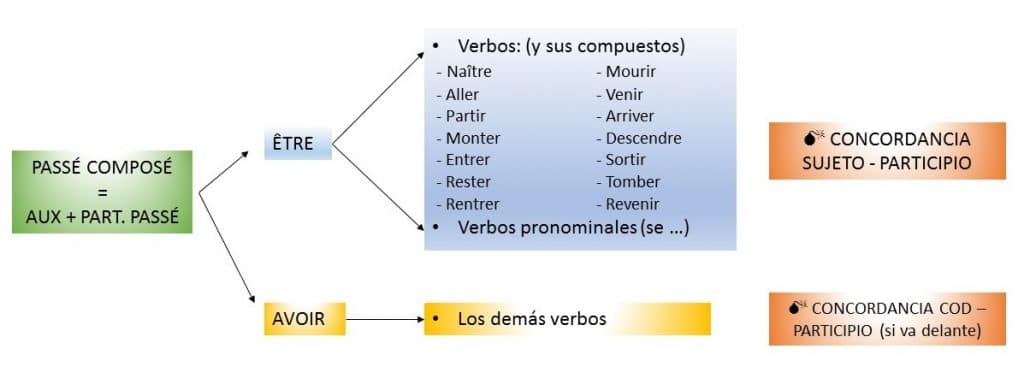
LE PASSÉ COMPOSÉ

Los Verbos en Francés - Verbes - Idioma Francés


LE PLUS-QUE-PARFAIT

A) EMPLOI

  • Le plus-que-parfait, employé avec le passé-composé, permet d'exprimer l'antériorité d'une action par rapport à une action passée.

     Exemples:

  • Il m'a dit qu'elle ne l'avait jamais appelé
  • Il m'a raconté qu'elle ne l'avait jamais appelé.


B) CONSTRUCTION

On conjugue les auxiliaires être ou avoir à l'imparfait de l´indicatif auquel on ajoute le participe passé du verbe à conjuguer.

Exemples : 
- Elles étaient parties à sept heures du matin.
- Nous avions raconté notre voyage.
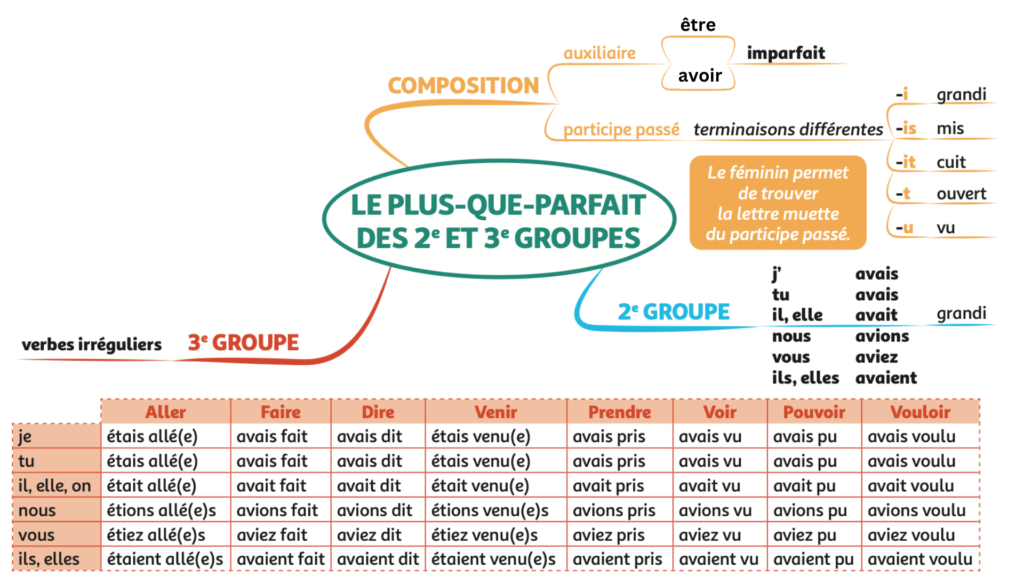
carte mentale conjugaison plus que parfait français

https://apprendre-reviser-memoriser.fr/


APTIS GENERAL


COMPOUND WORDS IN ENGLISH ✓ | Closed, Open & Hyphenated Compound words -  YouTube

PHRASAL VERBS:

 I agree with you

We are dealing with dangerous gangsters

We got on the plane yesterday

Hurry up! Or we won't arrive on time!

I am Looking after my young sister /We are Looking for her keys / I am looking forward to your answer

Wait, do not run away from your problems!

Watch out with the dog

Please, wipe off the windows!

Fill in the next sentences

I decided to cut down on chocolate

We won't give up our career

Come on and carry on with your life

Please, give my money back!

The lifter has broken down yesterday / Break on throw the other side


COMMON CONNECTORS

Then, next, finally

Afterwards (después)

Furthermore / Moreover / In addition

In order to / So that

However / Nevertheless

Although / Though / Even if (Aunque)

Actually / In fact (De hecho)

On the one hand / On the other hand / firstly, secondly... finally. 


 WRITING AND SPEAKING

 - Use Improve / Cause or Due to / Decrease / Increase

- Reported Speech: Researchers said / suggested / believed that... was / were...

 - 2nd Conditional: If I studied hard, I would pass my exam.

- 3rd Conditional: If I had studied hard, I would have passed my exam.

- Relative clauses: Who, where, whose, that, whom...

- Passive: It is said that... / A cure should be found / People are being fed

- Perfect tenses: I have studied / I had studied / Tomorrow this time you will have landed 

- Modals: must, can, have to, should, may


IDIOMS

-He killed two birds with a stone

-It costs an arm and a leg

-It's raining cats and dogs

-Break a leg! (Good luck!)

-This job is a piece of cake (very easy)

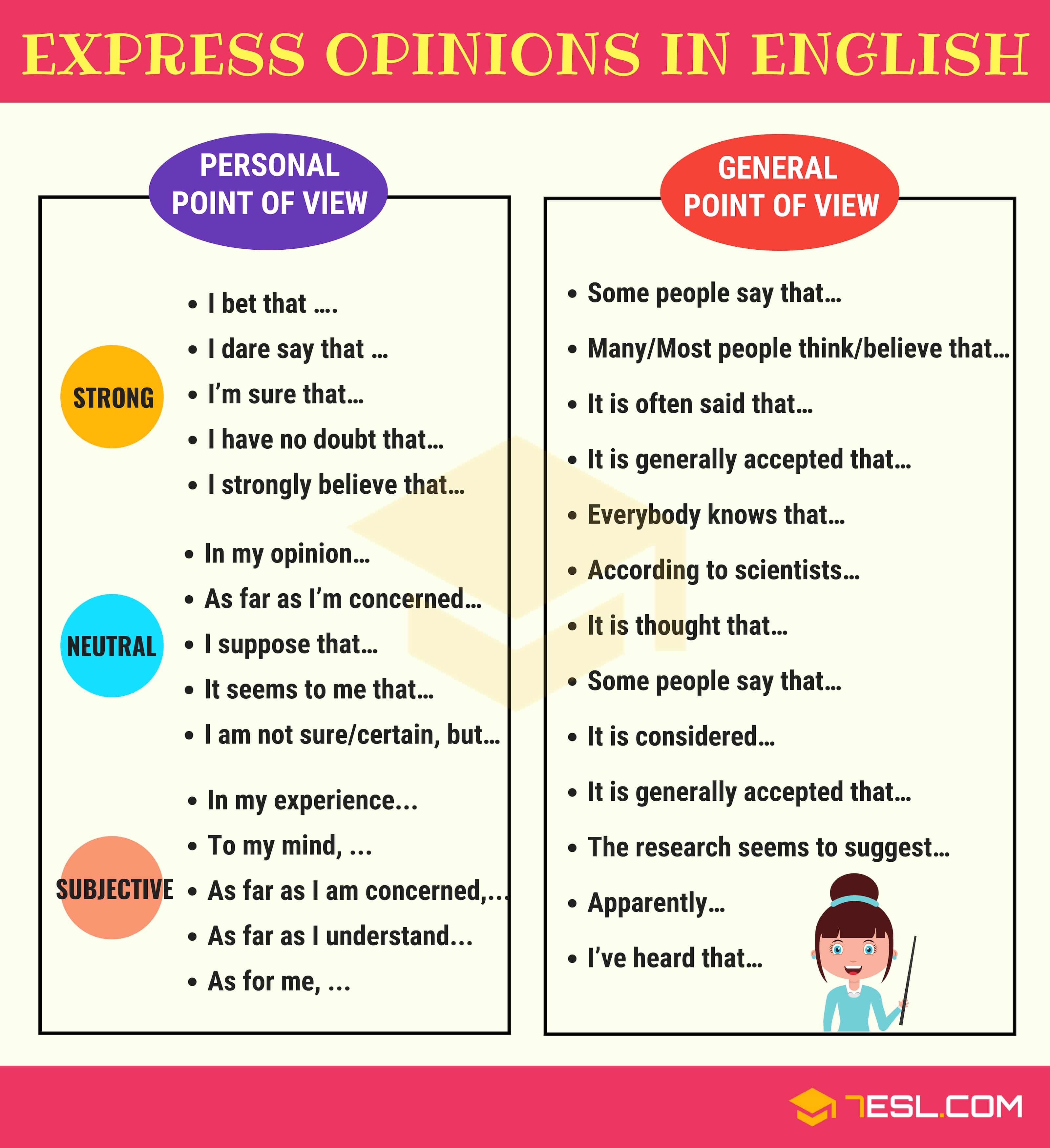
How to Express Your Opinions in English • 7ESL